Precision, Reliability, and Durability, All in One System.
With the increasing demands for energy infrastructure, there are two things you can’t afford: ruined product and long downtimes. CEC furnaces exceed your heat treatment requirements, making sure that you never lose a load to poor uniformity, and our durable designs and world-class service keep downtime to an absolute minimum.
What We Build for Energy
Batch Furnaces – for stress relieving, normalization, tempering, and heavy-section thermal processing
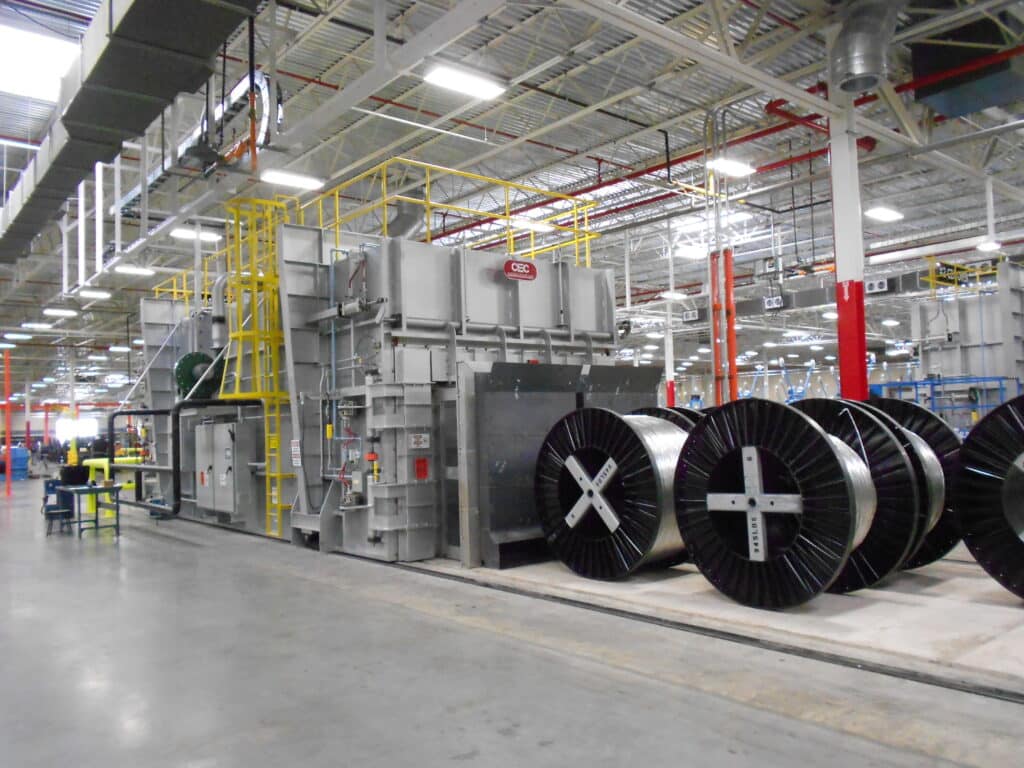
Car Bottom / Mobile Furnaces – for pressure vessels, wire annealing, and large fabricated components
Tip-UP Furnaces – for specialized large-load handling
PWHT Systems / Multi-Zone Stress-Relief Furnaces – for pressure vessels and variable-thickness weldments that need tight temperature balance
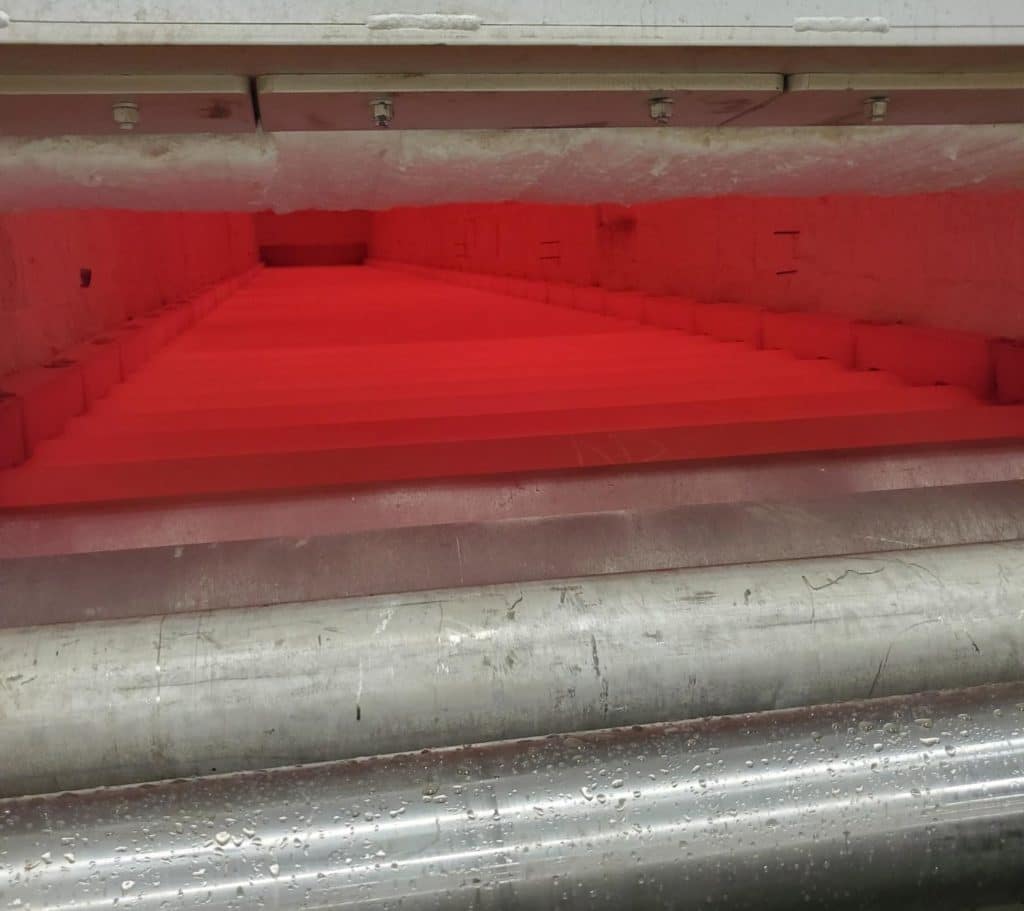
Roller Hearth Furnaces – for continuous processing of tubulars, bars, rods, and other product-driven energy components
Drop-Bottom and Vertical Furnaces – for quench-critical or tall/large format components
Trusted by Energy Industry Leaders
Many of the companies rising to meet the ever-expanding need for energy infrastructure choose the unparalleled performance, efficiency, and reliability of CEC equipment for their heat treating needs.
Conventional and Nuclear Power: Stress-relief for turbine blades, rotors, and casings; Post-weld heat treatment of pressure vessels
Oil, Gas, and Geothermal: Pipeline component normalization, quench and temper; Pressure vessel post-weld heat treatment; Valve, flange, and pump component stress-relieving
Renewable and Grid Storage: Stress-relief for wind turbine blades, casings, and rings; Tempering for generator components
Experience You Can Count On
Since 1959, CEC has partnered with manufacturers in the energy industry to design furnaces that enhance productivity and meet exacting metallurgical standards. Every furnace is backed by CEC’s full lifecycle support – parts, service, everything your system needs to run like new year after year.
Providing the Energy Industry More than Just Exceptional Performance
Standards-Aligned: Systems expertly designed to meet requirements from your product standards, including ASM, ASME BPVC, NNPP/NR, NADCAP, and CQI-9.
Throughput and Uptime: Equipment engineered to endure long duty cycles and maximize production without costly downtime.
Audit-Ready Data: Times, temperatures, events, all the information on your product cycle you need, there when you need it.
Built with You: Joint design reviews and frequent project updates ensure that the system you receive meets every expectation.
Cutting-Edge Controls and Enhanced Data Integrity
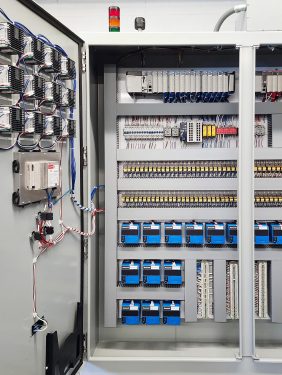
The Best in Automated Control: With a PWHT multi-PID relational control program, our PLCs hold precise temperature balance and reduce strain on parts with varying section thicknesses throughout the cycle.
CMMC 2.0 Ready: Both CEC and our furnace systems are meticulously prepared to handle sensitive CUI and FCI data. System and cycle data is gathered, stored, and reported using secure-access immutable information systems.
Pyrometry Spec Integrated: Calibration, uniformity, and controls testing requirements are scheduled in to the system controller to help you stay on top of your specification compliance.
Spotlight: Small Modular Reactor Vessel Post-Weld Heat Treatment
With the rise of Small Modular Reactors comes the difficulty of post-weld heat treating complex reactor and pressure vessels. CEC has designed a PWHT system capable of keeping the temperature across the vessel precisely balanced during the heating and cooling cycles, minimizing stress in variable-thickness vessels.
The CEC PWHT system uses advanced relational geometric mapping of the vessel-mounted control sensors to establish a control ratio network with the heating elements, enabling each sensor to act as a control zone no matter where it is located. PID control for each zone is processed by the control network to apply heat exactly where it is needed, virtually eliminating hot and cold spots on the vessel.
Spotlight: Power Transmission Wire Annealing
In the power transmission industry, wire annealing is essential for achieving the proper balance of conductivity and flexibility in finished cable. To meet today’s growing infrastructure demand, production efficiency and throughput are critical.
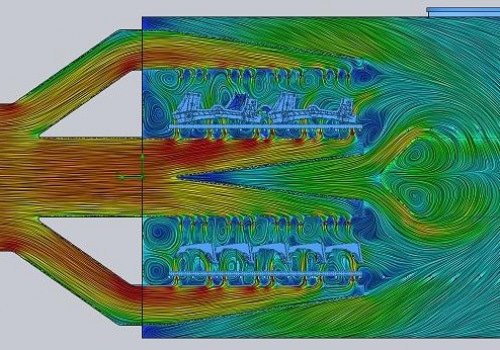
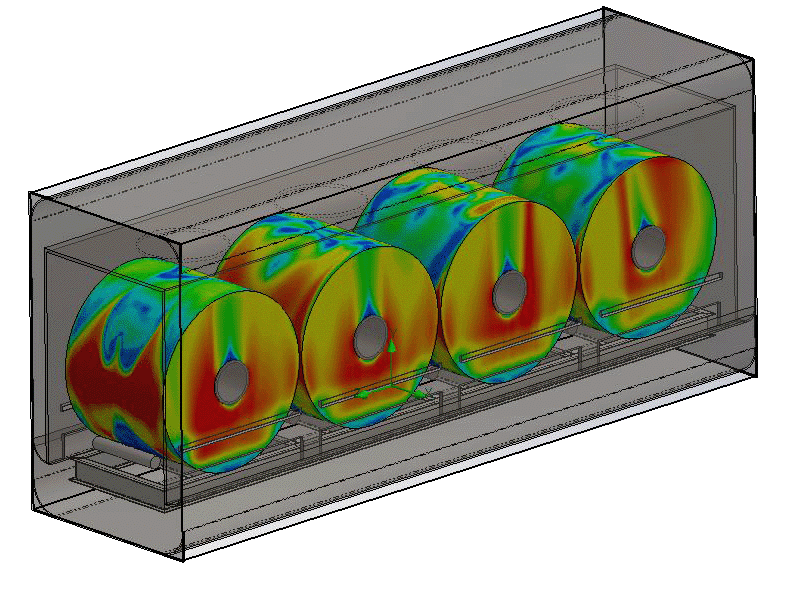
CEC’s mobile annealing furnaces are built with continuous production in mind. Each furnace features two independent load pads—while one pad is actively annealing, the other can be simultaneously unloaded and reloaded. This alternating setup virtually eliminates idle time between cycles, allowing for near-continuous operation and significantly higher production rates.
When Performance Matters
Partner with CEC – Your Best Source for Energy Industry Heat Treating Equipment!
We use cookies on our website to give you the most relevant experience by remembering your preferences and repeat visits. By clicking “Accept”, you consent to the use of ALL the cookies.
This website uses cookies to improve your experience while you navigate through the website. Out of these, the cookies that are categorized as necessary are stored on your browser as they are essential for the working of basic functionalities of the website. We also use third-party cookies that help us analyze and understand how you use this website. These cookies will be stored in your browser only with your consent. You also have the option to opt-out of these cookies. But opting out of some of these cookies may affect your browsing experience.
Necessary cookies are absolutely essential for the website to function properly. This category only includes cookies that ensures basic functionalities and security features of the website. These cookies do not store any personal information.
Any cookies that may not be particularly necessary for the website to function and is used specifically to collect user personal data via analytics, ads, other embedded contents are termed as non-necessary cookies. It is mandatory to procure user consent prior to running these cookies on your website.